Playa Del Rey Lifestyle Guide for Coastal Westside Living
If you want beach access without the constant intensity of a larger coastal hub, Playa del Rey may be one of the Westside’s most appealing options. This neighborhood offers a more residential pace, a compact local business core, and easy access to shoreline recreation, all within Los Angeles. If you are considering a move here or simply want to understand what daily life feels like, this guide will help you see how Playa del Rey fits into the bigger coastal picture. Let’s dive in.
Playa del Rey has a distinct identity on the Westside. The City of Los Angeles describes it as a walking community with shops, restaurants, and beaches close together, and estimates a population of about 14,400 residents. The city also frames it as a place with a small-town feel inside a large city, which is a useful way to understand its appeal.
Planning documents reinforce that impression. The Westchester-Playa del Rey Community Plan describes the neighborhood as mostly residential, with commercial uses concentrated along Culver Boulevard, Pershing Drive, and Manchester Avenue. In Playa del Rey, those business areas are neighborhood-serving and village-like, with smaller lots and a pattern that supports locally operated businesses.
If you are comparing beach communities, that matters. Playa del Rey generally reads as quieter and more residential than nearby Venice or Marina del Rey, which both have a stronger visitor and commercial presence according to City of Los Angeles neighborhood descriptions.
One of Playa del Rey’s biggest strengths is how easy it is to enjoy the coast. Dockweiler State Beach is the signature shoreline amenity, and Los Angeles County says it includes 3.7 miles of ocean frontage and 288 acres of beach. The county also notes amenities such as restrooms, showers, picnic facilities, fire rings, and volleyball nets, along with activities that include biking, surfing, swimming, fishing, diving, hang gliding, and volleyball at Dockweiler State Beach.
For many residents, the beach is not just a weekend destination. It becomes part of everyday life, whether that means an early walk, a bike ride after work, or a quick stop to catch the sunset. That kind of routine access is a major part of the neighborhood’s lifestyle.
Another important asset is the Marvin Braude Bike Trail, a 22-mile paved coastal path that runs between Will Rogers State Beach and Torrance Beach. County information notes that it connects beach areas including Playa del Rey, Marina del Rey, Venice, and Santa Monica, which makes it a practical recreation route and a scenic way to move between nearby coastal communities.
Playa del Rey offers more than just beach frontage. The neighborhood also benefits from smaller park spaces and access to one of Southern California’s most notable wetland areas.
Del Rey Lagoon Park is a local resource within the neighborhood, with lighted baseball and basketball courts and dawn-to-dusk hours listed by the City parks system. It adds a simple but valuable layer of everyday recreation close to home.
The Ballona Wetlands bring a different kind of open-space experience. The Community Plan describes them as a valuable public resource and one of the last remaining saltwater wetlands in Southern California, with habitat value for native plants and animals. Public access is more structured than a typical neighborhood park, and Ballona Wetlands access information notes entry details from the Playa del Rey side near 303 Culver Blvd.
That combination of beachfront, lagoon, and wetland access gives Playa del Rey a strong connection to the natural environment. For buyers who want a coastal setting that still feels grounded in open space, that is a meaningful advantage.
Playa del Rey’s commercial core is compact, which is part of its charm. The Community Plan identifies a pedestrian-oriented area along Culver Boulevard between Nicholson Street and Pacific Avenue, and notes that west of Nicholson Street the corridor includes multifamily residences, restaurants, offices, and small-scale shops and services.
This is not a neighborhood built around large retail centers or a heavy entertainment zone. Instead, it offers a smaller collection of places that support daily life, with local businesses playing a visible role in the streetscape.
A few current examples help show that tone. Playa Provisions is located at 119 Culver Blvd and offers a casual coastal dining setting with patio and takeout service. The Shack at 185 Culver Blvd is a long-running neighborhood spot established in 1972, and Caffé Pinguini at 6935 Pacific Ave has operated in Playa del Rey since 1997 based on its official site.
For you as a buyer or homeowner, the takeaway is straightforward. Playa del Rey has enough restaurants and neighborhood-serving businesses to make day-to-day living convenient, but it still feels local rather than overbuilt.
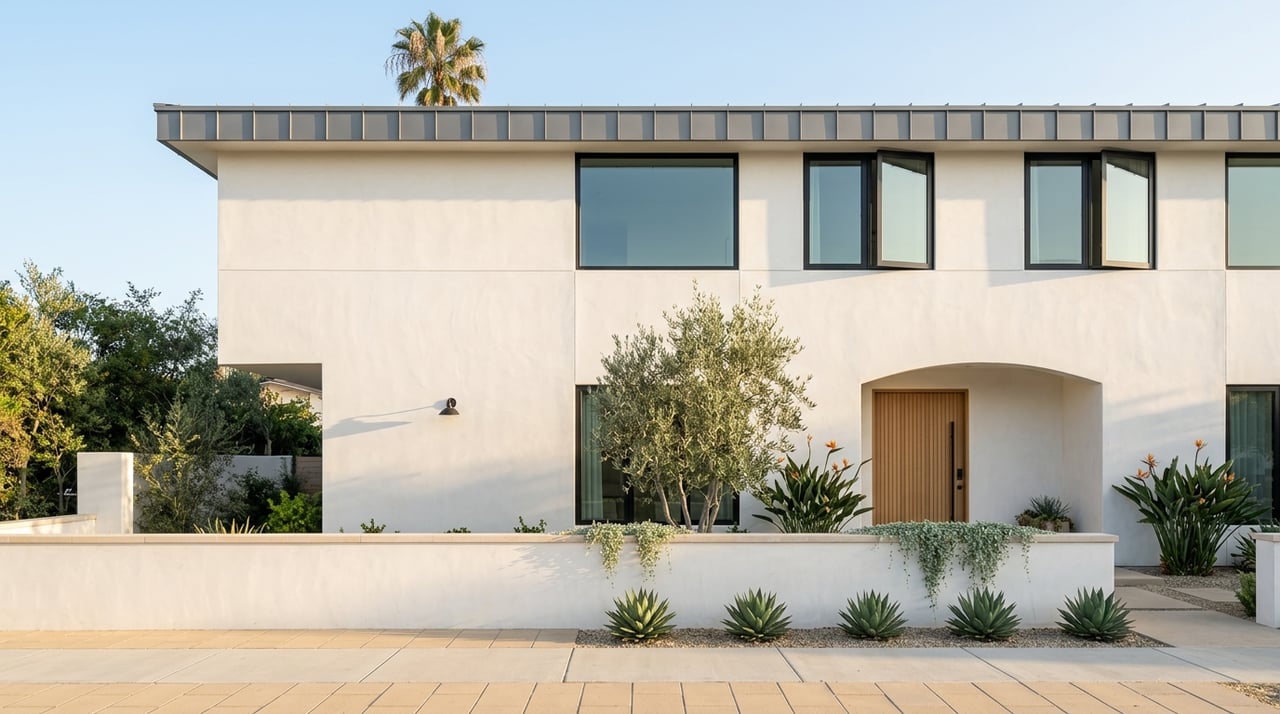
Housing in Playa del Rey is mixed and largely low-rise. According to the Community Plan, the neighborhood includes both single-family and multifamily dwellings, with densities ranging from low to high medium, and nearly all housing stock was built in the post-World War II era.
The planning documents also describe subareas with different physical character. The blufftop area includes one- and two-story single-family homes with scenic views. The lagoon area includes two- and three-story residential buildings and duplexes, while the beachside area known as the Jungle includes two- and three-story multifamily housing on very narrow walk streets closed to vehicles.
That mix creates options for different types of buyers. You may find condos, duplexes, multifamily opportunities, or detached homes, depending on your budget, goals, and preferred setting. It also suggests a neighborhood that is already fairly established, with a built-out feel rather than a large-scale new development pattern.
Location is one of Playa del Rey’s practical advantages. Culver Boulevard serves as the main access route to the lowlands and beach from Lincoln Boulevard, Playa Vista, the 405 Freeway, and surrounding communities, according to the Community Plan.
For many buyers, proximity to LAX is part of the equation. The same planning documents note that the airport creates significant employment and business opportunities, while also contributing aircraft noise and traffic impacts. That balance is important to understand if you are evaluating the neighborhood for both convenience and day-to-day livability.
Transit options are available, even if this is not one of the Westside’s most transit-dense neighborhoods. LA Metro schedules list Line 115 serving Playa del Rey to Norwalk via Manchester and Firestone, and Big Blue Bus Route 16 connects Playa del Rey with Westside destinations including Santa Monica College, Venice, Marina del Rey, Loyola Marymount University, and Westchester.
If you are deciding among Westside coastal areas, it helps to understand where Playa del Rey fits. Compared with nearby options, it tends to stand out for its quieter, more residential feel.
Venice is described by the city as more eclectic and vibrant, with a stronger residential and commercial mix. Marina del Rey, by contrast, is more harbor-centric and amenity-heavy, with a larger concentration of boating, retail, office, and restaurant uses.
Playa del Rey sits in a different lane. It offers beach access and local conveniences, but its commercial pattern is smaller and more village-like. If you want the coast without as much activity at your doorstep, Playa del Rey may be the better match.
Playa del Rey can work well for buyers who want a lower-key coastal setting with practical Westside access. If you value being near the beach, appreciate a walkable layout, and prefer a neighborhood that feels more residential than tourist-driven, it checks a lot of boxes.
It may also appeal to buyers who want a range of property types. Because the neighborhood includes single-family homes, condos, duplexes, and multifamily buildings, there can be flexibility depending on your budget and goals.
As with any coastal purchase, the right fit comes down to your priorities. You may be weighing lifestyle, access, housing type, or how the neighborhood compares with Venice, Marina del Rey, or other nearby areas. That is where local guidance can help you narrow the options.
If you are thinking about buying or selling in Playa del Rey, working with someone who understands the Westside’s coastal neighborhoods can make the process much clearer. Terry Ballentine has been guiding coastal real estate decisions for decades and can help you evaluate Playa del Rey in the context of your goals.


With more than 50 years in Westside real estate, Terry Ballentine offers unmatched expertise in Marina del Rey, Venice, and nearby coastal communities. He provides personalized guidance for buyers, sellers, and investors, earning long-term trust and repeat clients. Terry’s hands-on approach and deep local knowledge ensure every transaction is handled with care and precision.
Terry Ballentine | CA DRE# 00588883
124 Washington Blvd Marina Del Rey, CA 90292