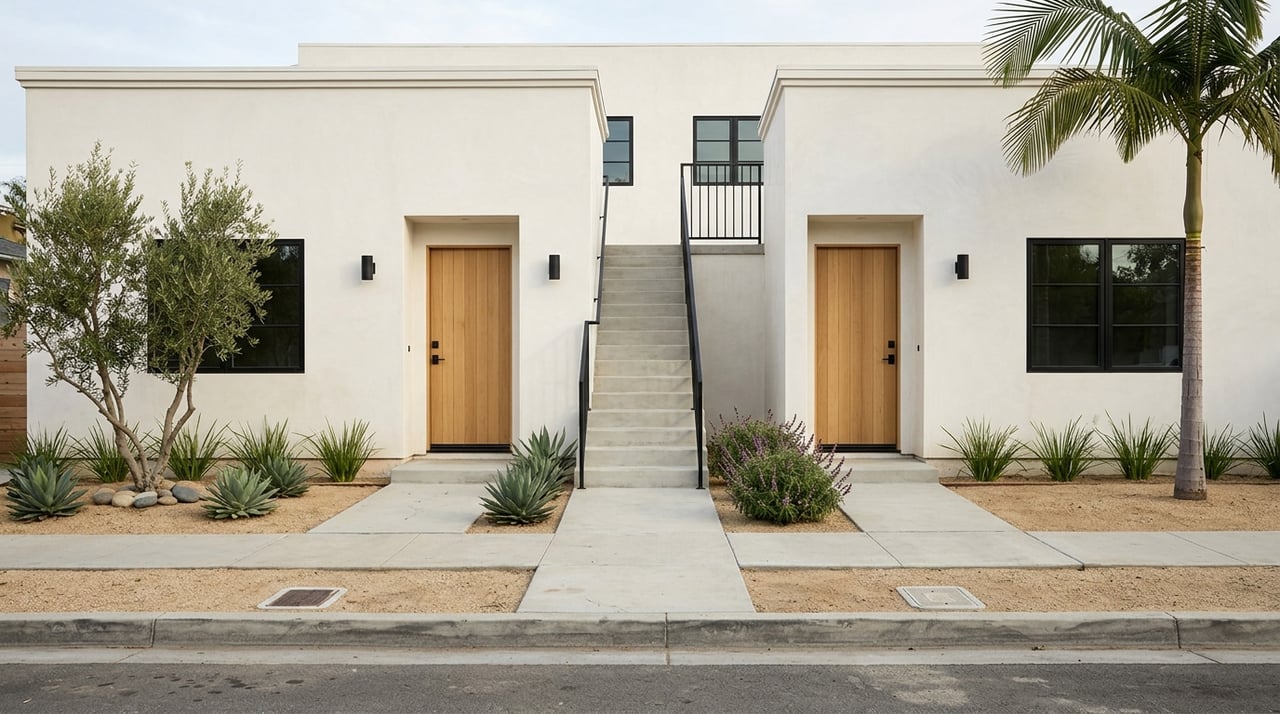
Culver City Duplex And Income Property Essentials
Wondering whether a Culver City duplex or small income property is a smart move? You are not alone. In a built-out Westside market with high home values, strong rents, and older housing stock, the details matter more than ever. If you are thinking about buying, selling, or taking over a duplex or rental property in Culver City, this guide will help you focus on the issues that most often shape value, timing, and risk. Let’s dive in.
Culver City is a small Westside market with limited room for outward growth. The city’s housing planning documents describe it as essentially built out, with most change happening through redevelopment and infill rather than large new expansion.
That matters for duplex and income property owners because supply is naturally constrained. The city had an estimated 39,883 residents and 17,529 households in 2024, with an owner-occupied housing rate of 54.6%. Census data also shows a median gross rent of $2,737 and a median owner-occupied home value of $1,142,900, which points to a high-cost market where rental demand remains important.
Recent market snapshots show that pricing remains elevated. Redfin reported a March 2026 median sale price of $1.45 million, with homes selling in about 37 days and receiving around six offers on average. RentCafe reported an April 2026 average apartment rent of $3,261, which is best used as a directional sign of rent strength rather than a property-by-property underwriting number.
If you are searching for a duplex or small income property in Culver City, it helps to know where that property fits in the city’s housing mix. According to the city’s housing element, single-family detached homes account for about 39% of the housing stock, while multifamily buildings with five or more units also make up about 39%.
Smaller two- to four-unit properties make up about 12% of the city’s housing stock. So duplexes and triplexes are meaningful here, but they are not the dominant product type. That makes well-located and well-maintained small income properties especially worth understanding carefully.
The city also reports that about 64% of its housing units are two- or three-bedroom homes. For you as a buyer or seller, that helps explain why layout, bedroom count, and practical unit design can matter a lot in this market.
In Culver City, many duplex and income-property decisions start with zoning. The city’s zoning code identifies the R2 district as the two-family district for single-family dwellings and duplexes.
The RLD district is meant for low-density multifamily uses such as triplexes, fourplexes, townhouses, and similar housing. In practical terms, that means you should not assume a property’s current setup tells the whole story. The parcel zoning, the legal use, and the building history all matter.
A large share of Culver City housing is older. The city reports that about 63% of housing units were built at least 50 years ago, and about 92% were built at least 30 years ago.
That can affect both cost and planning. Older buildings are more likely to need major repairs, including electrical and plumbing work. The city also notes that renter-occupied units show somewhat more rehabilitation need than owner-occupied units.
For you, this means the value of a duplex is not only about location or rent potential. Condition, deferred maintenance, and the quality of prior upgrades can meaningfully affect both pricing and negotiation.
If you are buying, it is wise to look closely at the basics. In many older Culver City buildings, the most expensive issues are not always visible during a quick first showing.
A practical review often includes attention to:
If you are selling, having clear records on repairs and property upkeep can help reduce uncertainty for buyers.
Culver City’s own housing analysis treats some vacancy as healthy because it gives renters choices and can encourage upkeep. In the city’s 2019 snapshot, rental vacancy was 5.7%, overall vacancy was 5.1%, and owner vacancy was 0%.
That tells you two useful things. First, rental housing has continued importance in the local market. Second, the for-sale side has historically been tight, which can support interest in small income properties when they come available.
Current rent indicators also remain high. Census QuickFacts lists median gross rent at $2,737, while RentCafe’s April 2026 average apartment rent was $3,261. Together, those numbers suggest strong demand, but they do not replace property-specific analysis.
In a market like Culver City, two duplexes with the same number of units may not command the same value. Condition, tenancy, layout, and rent structure can lead to very different outcomes.
That is why small income property value often depends on more than just door count. A cleaner rent roll, stable tenancy, efficient floor plan, and better-maintained units may have a real impact on how buyers view the opportunity.
One of the most important things to check with a Culver City duplex or small rental property is whether the units are covered by the city’s Rent Stabilization Ordinance. Culver City states that its permanent ordinance applies to parcels with two or more rental units built on or before February 1, 1995.
The city also says it administers its own local program rather than AB 1482. That means you should verify coverage carefully on a unit-by-unit basis rather than assume the same rule applies everywhere.
Single-family homes, townhomes, and condos are exempt from rent stabilization in most cases, according to the city. But for duplexes and other multi-unit properties, local applicability is often a central part of the valuation discussion.
For covered units, rent increases are capped under a CPI-based formula. The city’s current published maximum permissible increase is 3.25% for increases effective from April 1 through June 30, 2026.
The city also states that landlords may not impose more than one rent increase in any 12-month period for a covered rental unit unless a rent adjustment is approved. If you are buying an occupied property, these rules can directly affect cash-flow expectations.
Culver City requires annual rental-unit registration unless an exemption applies. The city says all rental units must be registered annually by July 31.
The current fee is $172.17 per unit per year, and there is also a $15 change-in-ownership fee. The city warns that rent increases issued without proper notice or registration may be invalid or unenforceable, and late registration may lead to penalties.
For sellers, this is more than a paperwork issue. Clean registration records can support a smoother sale process. For buyers, missing records can be a signal that more review is needed before you finalize terms.
When a duplex or income property is tenant occupied, paperwork can be as important as the physical condition. Before listing or buying, it helps to review:
In estate sales or inherited property situations, these details can become even more important because the current owner may not have managed the property directly.
Culver City’s Tenant Protections Ordinance applies to most rental units. The city says evictions must be based on for-cause or no-fault grounds.
That matters because a sale alone is not automatically a path to vacancy. The city states that selling a property is not itself grounds for eviction if a tenant has continuously and lawfully occupied the unit for 12 months or more.
If a buyer hopes to occupy a unit, reconfigure the property, or change the use plan, the legal path should be confirmed early. The city also notes that no-fault moves can require relocation assistance.
This is one of the most common mistakes in small income property planning. You may see a duplex on the market and assume one or both units can be delivered vacant on a standard closing schedule.
In Culver City, that assumption can create real problems. Occupancy status, tenant history, and local rules should all be verified before you rely on a future use plan.
Because much of Culver City’s housing stock is older, seismic review can be part of the conversation. The city’s soft-story seismic retrofit program is a mandatory safety initiative for older wood-frame multi-unit buildings.
As of January 2026, the city had notified 462 buildings, with 58 completed. The program’s priority list includes duplexes, triplexes, and townhouses among lower-priority structures that may require screening if they show soft-story characteristics.
For you as a buyer or seller, this means retrofit status should not be ignored. Even when a property is not immediately flagged, older wood-frame buildings deserve a closer look during due diligence.
If you are buying a Culver City duplex or small income property, try to keep your review simple and practical. Price matters, but local rules and building condition often matter just as much.
Focus first on these questions:
A strong purchase decision usually comes from understanding the full picture, not just the headline numbers.
If you are selling, buyer confidence can have a real effect on pricing and terms. In Culver City, that often means preparing both the property and the paper trail.
You will usually be better positioned when you can clearly show the current unit mix, tenancy status, registration compliance, rent history, and any known repair or retrofit information. For inherited or long-held family properties, organizing this information early can make the sale process much easier.
Culver City duplexes and income properties can look straightforward at first, but the real story is often in the details. Zoning, building age, local rent rules, registration status, tenant protections, and possible retrofit issues can all shape value and timing.
That is where steady local experience matters. If you are weighing a purchase, planning a sale, or sorting through an inherited property, working with someone who understands Westside multi-unit housing can help you avoid costly assumptions and move forward with more confidence.
If you want practical guidance on buying or selling a Culver City duplex or income property, connect with Terry Ballentine for experienced, low-pressure help tailored to your goals.

Explore details on Franklin Elementary School in Santa Monica.
With more than 50 years in Westside real estate, Terry Ballentine offers unmatched expertise in Marina del Rey, Venice, and nearby coastal communities. He provides personalized guidance for buyers, sellers, and investors, earning long-term trust and repeat clients. Terry’s hands-on approach and deep local knowledge ensure every transaction is handled with care and precision.
Terry Ballentine | CA DRE# 00588883
124 Washington Blvd Marina Del Rey, CA 90292