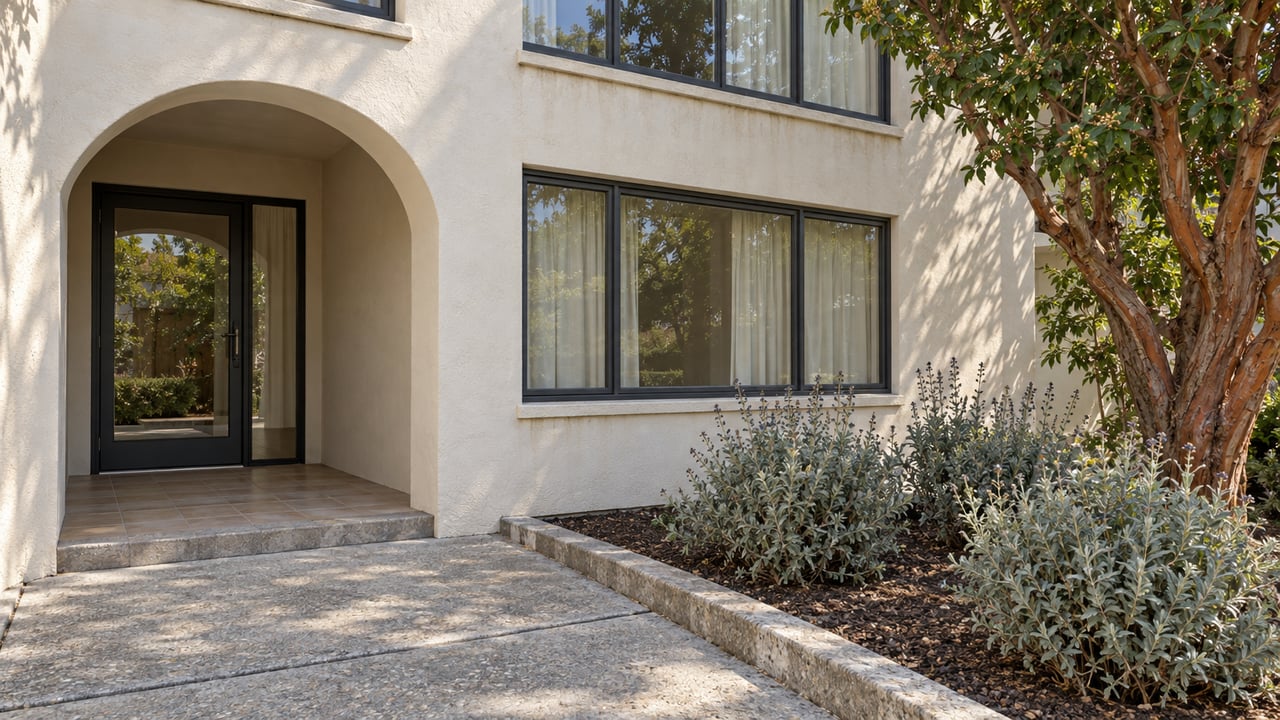
Why Building Size Now Matters More Than Price for a Palms Condo Sale
As of October 11, 2026, two condos were for sale a few blocks apart in Palms. One is in a six-unit complex on Keystone Avenue, built in 1981, with monthly HOA dues of $497. The other is in an 11-unit community on Cadillac Avenue, built in 1982, with dues of $457. They are the same age, the dues are close, and they serve the same kind of buyer.
Under the condo rules Fannie Mae and Freddie Mac adopted this year, those two buildings may face very different lender paperwork. The Keystone building is small enough that a lender can choose to skip the project review entirely. At 11 units, the Cadillac building is one unit past that cutoff, so a conventional loan there normally goes through the most detailed review the agencies have. Ten units is now one of the most important numbers in a Palms condo sale, and it shows up on no listing portal.
On March 18, 2026, Fannie Mae issued Lender Letter LL-2026-03, and Freddie Mac issued the matching Bulletin 2026-C the same day. The biggest change ended Limited Review, the lighter check that many established condo buildings had relied on for years. Fannie Mae's version had to stop for any loan application dated on or after Aug. 3, 2026. Freddie Mac's version, called Streamlined Review, was retired for mortgages with an Application Received Date on or after the same day.
The scale of the change is large. In its analysis of the changes, the Community Associations Institute said Limited Review had made up roughly 40% of all project reviews. CAI went on:
"This transition will require substantially more documentation and formal lender questionnaires for nearly all condominium sales, which will increase the administrative burden on community associations, managers, and volunteer leaders."
National Mortgage News reported in March that one large lender estimated about 40% of its own condo loans had used Limited or Streamlined Review. Industry sources quoted in the same piece warned that the heavier document requests could raise costs and slow transactions.
Lenders now have two options for most established buildings: Full Review or a Waiver of Project Review. Under Full Review, the lender checks the building in Fannie Mae's Condo Project Manager system and reviews the HOA's budget. The budget has to be adequate for the type of building and has to set aside a minimum share for replacement reserves. No more than 15% of units can be 60 or more days behind on dues or on any special assessment.
The same letter that ended Limited Review also widened the waiver, so that new and established buildings with ten or fewer units can now qualify. A waiver is not automatic. The letter sets these conditions:
The letter describes the waiver as an option lenders "use," so a small building is eligible for it but not guaranteed it. In practice, though, a buyer in a qualifying building with nine units faces much less lender scrutiny of the HOA's books than a buyer in a building with eleven.
That cutoff hits Palms harder than most Westside neighborhoods because of how Palms was built. A 1991 Los Angeles Times report found that apartments and condominiums had been replacing Palms bungalows since the late 1950s, and that they made up about 85% of the neighborhood's homes by then. A 2016 Times neighborhood profile described Palms as having one of the city's largest concentrations of 1950s and 60s-era dingbat apartments. That leaves a neighborhood full of small and mid-size multifamily buildings, many of them clustered just above or just below ten units.
Here is how four buildings with Palms condos for sale on October 11, 2026, line up against the new structure. The unit counts, years built and dues come from the active listings that day. The last column shows where each building falls under the rules. It is not a lender's decision.
| Building | Units | Year built | Monthly HOA | Review path under 2026 rules |
|---|---|---|---|---|
| Keystone Avenue complex | 6 | 1981 | $497 | Could qualify for a waiver |
| Cadillac Avenue community | 11 | 1982 | $457 | Full Review |
| Bentley Rose, Bentley Avenue | 23 | 2005 | $742 | Full Review |
| National Boulevard community | 30 | 1976 | $284 | Full Review |
The dues column shows why price per month tells a buyer little here. The National Boulevard building charges the lowest dues in the group. Under Full Review, though, a lender will look at what share of those dues goes into reserves. A low monthly fee can mean a lean, efficient association, or it can mean one that is setting very little aside. The budget documents decide which.
The 10% reserve test in the current Full Review guidance is temporary. For any Full Review loan application dated on or after Jan. 4, 2027, the minimum rises to 15%. That date is less than three months away, so it will fall inside the escrows of buyers who start shopping this winter.
The 15% is easy to misread. It does not measure how full the reserve account is. It is the annual amount the HOA budgets for replacement reserves, divided by the association's annual budgeted assessment income. Using round numbers, an association that collects $100,000 a year in dues would need to budget $15,000 a year for reserves instead of $10,000.
An association that falls short has another route. A lender can use a reserve study in place of the percentage test. Since Aug. 3, 2026, however, the HOA's budget has had to include the study's highest recommended reserve allocation, and the "baseline" funding method no longer counts. That method lets the reserve balance fall almost to zero.
The agencies explained their reasoning in the letter. Fannie Mae said it had seen "a correlation between condo projects with underfunded reserves for capital expenditures and those in need of critical repairs," and that owners in those buildings can face unexpected special assessments or higher dues. In October, the Los Angeles Times reported that condo owners across California have been hit with steep fees caused by aging buildings, rising insurance costs and required balcony inspections. The examples included a $26,000 per-unit roof assessment at a complex in San Clemente. The 15% rule is the agencies' attempt to catch those buildings before a loan closes rather than after.
California law already requires associations to produce the documents a buyer needs to see this ratio. The process works like this:
The budget's reserve line, divided by its assessment income, gives the same ratio a lender will calculate. The 15% test applies only to Full Review loans with applications dated Jan. 4 or later, but the documents that show where a building stands are already in every resale packet.
For sellers in buildings with 11 or more units, the lender questionnaire and budget review now come with almost every conventional sale. CAI expects the change to add administrative work for associations, managers and volunteer leaders, and warns it could slow transactions. The order in which documents get gathered can matter as much as the list price.
For buyers, a building's unit count and reserve line belong on the shortlist next to the square footage. Two units with the same price and the same dues can head toward very different closings.
FHA runs a separate system. HUD's August 12, 2026 handbook update included changes to FHA's condo single-unit approval process. It did not include a matching end to Limited Review or a 15% reserve rule. HUD says FHA's approval process looks at a building's insurance, finances, pending litigation and physical condition. Some units in buildings without FHA approval can still qualify through Single-Unit Approval.
Does the 15% rule apply to a loan already in process? The rule applies to Full Review loan applications dated on or after Jan. 4, 2027. The application date controls, not the closing date.
Is a ten-unit Palms building automatically exempt from review? No. It can qualify for a Waiver of Project Review, but only if it is not part of a master association or larger development, meets the insurance requirements and does not show an "Unavailable" status in Condo Project Manager. Lenders choose whether to use the waiver.
Is "15%" the same as a reserve study's "percent funded" figure? No. The rule measures annual reserve contributions against budgeted assessment income. Percent funded compares the reserve balance to the study's estimate of what the reserves should hold.
If you own a condo in Palms and are thinking about selling in the next year, it helps to know your building's unit count and reserve ratio before a buyer's lender asks for them. Terry Ballentine has guided Westside condo sales through several rounds of lending rule changes since 1976, and he can walk through your HOA's budget with you as part of a free home valuation.
This article is general information, not legal, tax or financial advice. Consult a qualified professional about your situation.


With more than 50 years in Westside real estate, Terry Ballentine offers unmatched expertise in Marina del Rey, Venice, and nearby coastal communities. He provides personalized guidance for buyers, sellers, and investors, earning long-term trust and repeat clients. Terry’s hands-on approach and deep local knowledge ensure every transaction is handled with care and precision.
Terry Ballentine | CA DRE# 00588883
124 Washington Blvd Marina Del Rey, CA 90292